
Plumber Gold Coast Blog
Home / Blog
Everything Robina Homeowners Should Know Before Replacing a Hot Water System
There is a particular kind of panic that comes with a cold shower at 6:30 in the morning when you have somewhere to be. The hot water system has failed — quietly, overnight, with no prior warning — and now you are standing in a bathroom weighing options you have never had to think about before. What type of system do you replace it with? How quickly can someone come? How much is this going to cost?
Robina residents face this situation more often than the suburb's polished reputation might suggest. With a population of over 21,000 people and a housing stock that skews toward the mid-to-late 2000s construction era, a significant number of hot water systems in this postcode are approaching or have already exceeded their expected service life. Storage systems typically last around ten years. Instantaneous systems can push to twenty under the right conditions. But the warm, humid subtropical climate that makes Robina genuinely pleasant to live in also creates specific operating conditions for hot water equipment that affects longevity, efficiency, and the choice of system type in ways worth understanding before committing to a replacement.
This article covers what that decision actually looks like in Robina in 2026 — the system types available, the real costs involved, the rebates that can significantly change the financial equation, and the questions worth asking before a technician arrives.
Why Robina's Climate Changes the Calculation
Most hot water system guides are written for a generic Australian audience, but the system that makes most sense in Melbourne or Hobart looks quite different from the one that makes sense in Robina. The suburb sits in a warm subtropical climate zone — mild winters that rarely push below 10°C, long summers with high humidity, and ambient temperatures that stay comfortably above 15°C for most of the year. That climate profile has a direct bearing on system efficiency that translates into real dollar differences over the life of a system.
Heat pump hot water systems, which extract thermal energy from the surrounding air rather than generating heat directly, operate at their highest efficiency when ambient temperatures are consistently warm. A heat pump that achieves a Coefficient of Performance — the ratio of heat produced to electricity consumed — of 3.0 in Sydney might achieve 3.5 or higher in Robina simply because the air temperature it is drawing from is warmer for more of the year. That means lower electricity consumption per litre of hot water produced, which compounds over a ten to fifteen year system lifespan into meaningful savings on quarterly power bills.
Similarly, solar hot water systems perform exceptionally well in southeast Queensland's high solar irradiance conditions. Robina receives some of the strongest and most consistent solar exposure in the country, which means a properly sized and positioned solar system will deliver free hot water for a larger proportion of the year than the same system installed in a lower-irradiance climate zone. The backup element — gas or electric — activates less frequently, reducing operating costs substantially compared to what the same system would achieve further south.
These climate advantages are not theoretical. They are the reason that heat pump and solar systems, while carrying higher upfront costs than conventional electric storage systems, typically deliver their payback in meaningfully shorter timeframes in Robina than in cooler Australian cities.
The System Types Available and What Each One Actually Involves
Understanding the practical differences between system types helps homeowners make a decision based on their actual household situation rather than on marketing language.
Electric storage hot water systems are the most common type found in Robina's existing housing stock, particularly in properties built before 2012 when Queensland building codes changed to require more energy-efficient alternatives in new constructions. These systems heat water in an insulated tank using an electric element, and they keep that water hot around the clock. The simplicity is genuine — they are relatively inexpensive to purchase, straightforward to install, and widely serviced. The disadvantage is running cost. Electric storage systems are among the most expensive to operate per litre of hot water delivered, and they consume electricity regardless of when hot water is actually needed. For households on time-of-use electricity tariffs, programming the heating cycle to run on overnight off-peak rates significantly reduces running costs — but this requires a dedicated off-peak electricity circuit, which not all Robina properties have.
Gas hot water systems split into two categories that behave quite differently. Storage gas systems work similarly to electric storage but use a gas burner rather than an electric element, and they are generally cheaper to run than electric storage where natural gas is available. Continuous flow gas systems — also called instantaneous or on-demand systems — heat water only when a tap is opened, eliminating standby heat loss entirely. The continuous flow model suits households with varying usage patterns well, and the extended lifespan of up to twenty years makes the higher upfront cost easier to justify over time. Natural gas availability in Robina is reasonable but not universal, and new connections have become progressively more difficult and expensive in recent years as Queensland's gas infrastructure investment priorities have shifted.
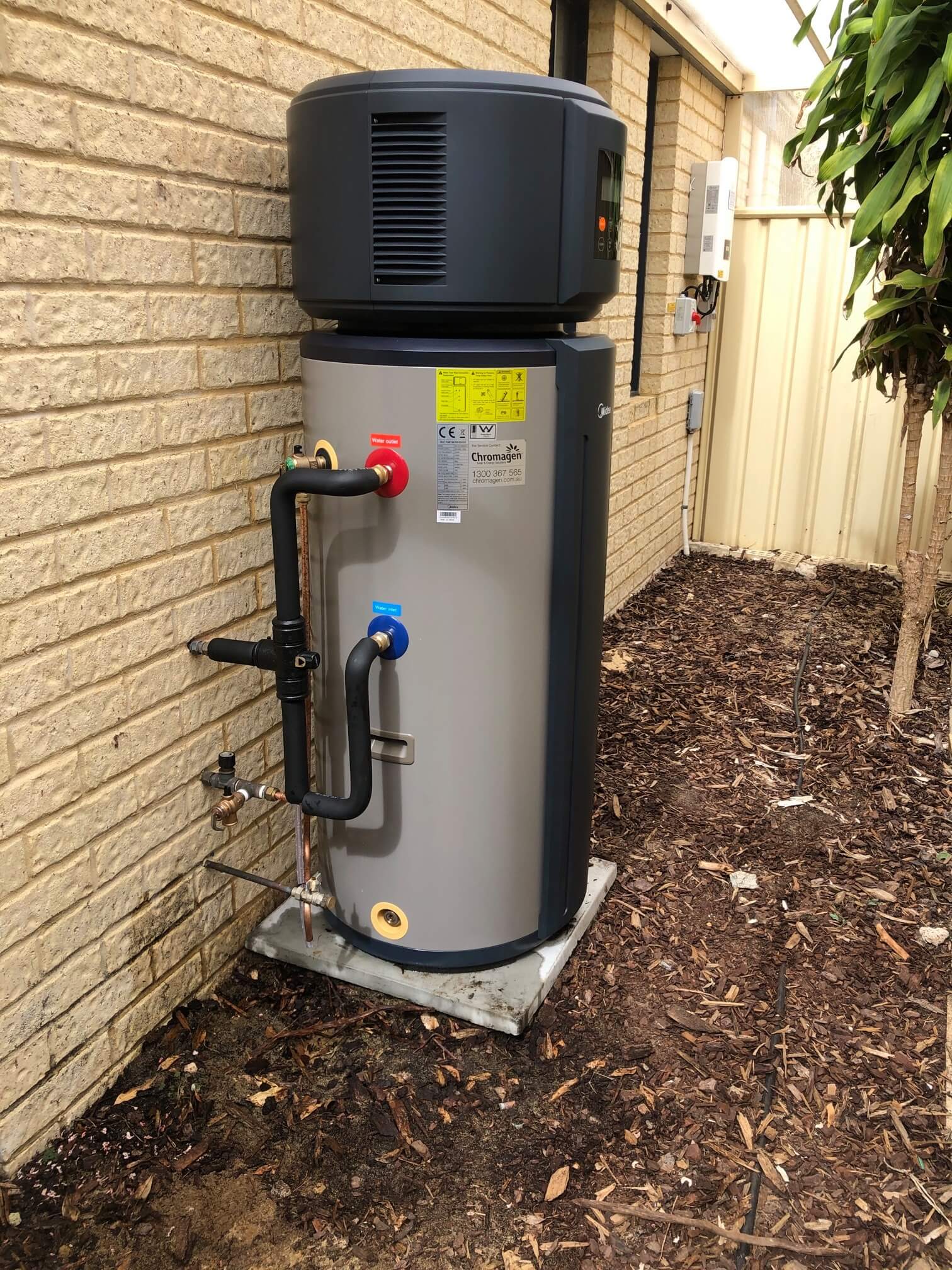
Heat pump hot water systems have become the most financially compelling choice for many Robina households in 2026, and the combination of falling equipment costs, improving technology, and available government incentives has accelerated their uptake substantially. These systems operate like a refrigerator in reverse — extracting heat from the surrounding air and transferring it to the water in the storage tank. The electricity consumed drives the heat transfer process rather than generating the heat directly, which means a heat pump delivers three to four units of heat energy for every one unit of electrical energy consumed. In Robina's warm climate, this ratio operates at or above manufacturer specifications for a larger proportion of the year than in cooler markets, making the efficiency case particularly strong. The primary practical considerations are noise — heat pumps produce a low-level operational sound similar to a reverse-cycle air conditioner — and placement, since they require adequate airflow around the unit to operate efficiently.
Solar hot water systems combine roof-mounted collector panels with a storage tank that is either roof-mounted or ground-level. The collectors capture solar energy to heat water directly, with a gas or electric booster handling demand on overcast days or during extended periods of high household usage. Southeast Queensland's solar conditions make this technology perform well, but roof orientation, shading from trees or neighbouring buildings, and the structural requirements for roof-mounted tanks are site-specific factors that require assessment before recommending solar over heat pump for any particular property.
Instantaneous electric systems — typically small under-sink units for specific point-of-use applications — are common as supplementary systems for bathroom additions or kitchen renovations in Robina homes, though they are rarely appropriate as a whole-home hot water solution due to their high electricity consumption when scaled to full household demand.
What It Actually Costs in Robina in 2026
The cost question deserves a straightforward answer, which means acknowledging that "it depends" is often the honest starting point while still providing the real numbers that help homeowners prepare.
For a like-for-like electric storage replacement — same tank size, same location, no additional compliance work — Robina homeowners should budget in the range of $1,000 to $1,800 installed, depending on the brand and capacity. This is the lowest upfront cost option but carries the highest ongoing running cost of any system type.
Continuous flow gas systems installed in Robina typically cost between $1,400 and $2,800 depending on the unit's flow rate capacity and whether existing gas infrastructure requires modification. Premium brands and units with built-in temperature controls sit toward the upper end of that range.
Heat pump systems represent the widest pricing spread in the current Robina market. Before any available rebates, installed costs run from approximately $3,200 for entry-level units from brands like iStore up to $6,500 or more for premium units like Sanden's CO2 heat pump systems. After applying the federal government's Small-scale Technology Certificate discount — which reduces the upfront cost by $600 to $900 for most Queensland installations and is applied directly by participating installers rather than requiring a separate rebate claim — the effective installed cost sits in the range of $2,300 to $4,400 for most households. Queensland's warm climate classification means Robina properties generate a strong STC entitlement, which is a genuine financial advantage over properties in southern states. The average installed cost across southeast Queensland as of March 2026, based on real quotes from the national installer network, sits at approximately $4,014 including STCs and standard installation — a figure that reflects competitive local pricing among Robina's active installer market.
Solar hot water systems installed in Robina typically run from $3,500 to $6,000 depending on collector type, tank size, and booster configuration, with STCs also applicable to reduce the upfront figure.
One cost category that consistently surprises homeowners is additional compliance work. Queensland plumbing regulations have evolved, and older installations may require pressure-limiting valves, tempering valves, or expansion control valves to be installed or upgraded when a system is replaced. These are not optional — they are legal requirements — and a quality installer will identify what is needed during the quote process rather than presenting them as surprise additions on the day. Clarifying what compliance items are included in a quoted price, and what might be required following a site assessment, is one of the most important questions to ask before accepting any quote.

The Signs That a Hot Water System Needs Attention
Most hot water system failures do not announce themselves dramatically in advance, but there are patterns worth recognising before the complete failure that leaves a household without hot water.
Inconsistent water temperature — particularly a system that was previously reliable but now delivers water that fluctuates between too hot and not hot enough — often indicates a failing thermostat or element in a storage system, or a developing issue with a continuous flow unit's flow sensor or heat exchanger. Discoloured water, particularly a rust or brown tinge when first running hot water in the morning, suggests internal tank corrosion that in a storage system typically means the anode rod has been exhausted and the tank wall is beginning to corrode — a condition that generally precedes tank failure.
Unusual noises from a storage system — rumbling, popping, or banging sounds during the heating cycle — indicate mineral scale build-up on the element or base of the tank, which is a common issue in areas with harder water and one that reduces system efficiency and accelerates wear. A system that is visibly leaking from the tank body, as distinct from relief valve discharge which may be normal, requires urgent attention since the alternative to prompt response is typically a flooded roof cavity or internal space.
For households that cannot remember the last time their hot water system was serviced or inspected, scheduling a maintenance check — particularly for systems approaching the eight to ten year mark on a storage unit — is considerably less disruptive and less expensive than managing a complete failure on a weekday morning.
Choosing a Hot Water Plumber in Robina
Robina has genuine competition among licensed hot water plumbers, which works in homeowners' favour in terms of pricing and availability. Several providers offer same-day service across the Gold Coast, zero call-out fees during business hours, and upfront pricing before any work begins — practices that reflect a mature, competitive local market.
The practical checklist for evaluating a provider is straightforward. Confirm that the business holds a current Queensland Building and Construction Commission trade contractor licence and, where gas work is involved, a current gas work licence issued by the Petroleum and Gas Inspectorate. Ask for a written, itemised quote rather than a verbal estimate, and confirm what compliance items are included. Ask specifically whether the quoted price includes the STC discount for heat pump or solar installations, since some providers quote before-rebate figures and apply the discount separately.
Workmanship guarantees vary between providers and are worth understanding before committing to an installation. A provider willing to stand behind their work with a documented guarantee, covering both the installation labour and ensuring that manufacturer warranties are not voided by incorrect installation practice, is a meaningfully different proposition from one that offers no such assurance.
The Practical Conclusion
Robina's climate, housing stock, and competitive installer market combine to make this a better-than-average place to make a smart hot water system decision. The warm subtropical conditions genuinely favour heat pump technology in ways that translate into lower running costs and faster payback. The available federal incentives reduce the financial barrier to choosing the most efficient system type rather than simply the cheapest upfront option. And the density of qualified local installers means that response times are competitive and pricing pressure keeps the market honest.
The decision is ultimately a function of four things: the household's current energy setup, the available installation space, the upfront budget, and how long the homeowner expects to remain in the property. A household planning to sell within two years may make a different calculation than one expecting to be in place for a decade. A property with excellent roof orientation and minimal shading may favour solar. One with a well-ventilated outdoor equipment area and a strong preference for simplicity may find a heat pump the easiest and most financially compelling path.
What does not change across any of these scenarios is the value of making the decision before the system fails rather than after it — with the time to compare options, get multiple quotes, and choose based on what makes sense for the household rather than on what can be installed fastest on the morning the cold shower arrives.


Plumbing issues can strike at any time, day or night. That's why our dedicated team offers round-the-clock emergency services.





Contact Us


Phone

Address Office
Shop 6001, Level 2/19 Robina Town Centre Dr, Robina QLD 4226
Copyright @ 2024. All Rights Reserved. Privacy Policy | Terms and Conditions